Is Squarespace Good for Service Businesses (The Truth)
Your website should be your favorite salesperson — the one who never calls in sick, keeps things simple, and quietly books clients while you’re off living your life.
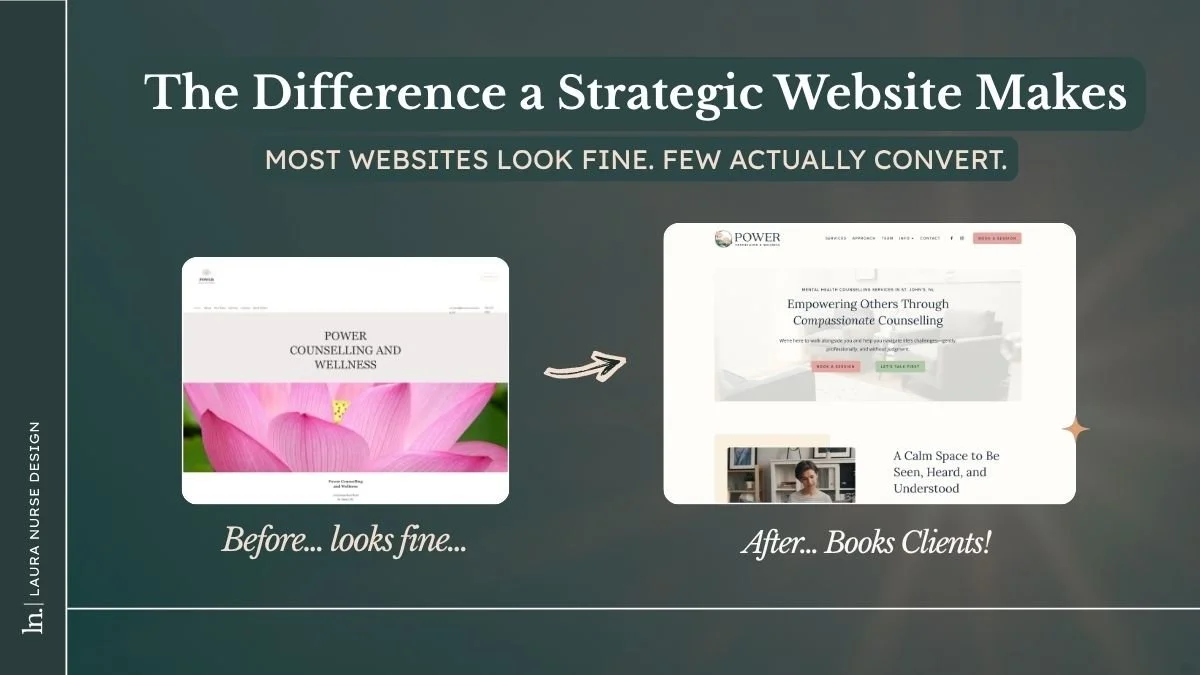
But most service-based businesses don’t get that kind of support from their website. Instead, they end up with something polished on the outside but useless on the inside: no leads, no clarity, no trust signals, and no idea what’s actually wrong.
Let’s break down what a service-business website is supposed to do, how Squarespace stacks up, where it hits its limits, and who it’s truly built for.
Table of Contents
What a High-Performing Service Website Actually Needs to Do
A good website is more Swiss Army knife than hardware store — a few sharp, essential tools that actually work. If you want a website that pulls its weight, it should do these five jobs well:
1. Showcase what you do (clearly).
Visitors should land on your homepage and instantly understand:
Who you help
What you offer
How to hire you
Clarity first, design second.
Squarespace keeps this simple with clean page layouts and service templates that stay focused.
2. Generate leads.
This means:
Obvious calls to action
Smart, frictionless forms
A fast way to contact or book you
About 70% of small business websites don’t even have a clear CTA on their homepage. Don’t join them.
Squarespace’s forms, buttons, and built-in scheduling make this delightfully easy.
3. Build credibility.
Trust is everything in services. People judge your credibility within seconds:
75% based on design alone
Nearly 90% based on reviews
Testimonials, case studies, portfolios, Google reviews — these aren’t “nice to have.” They are conversion assets.
4. Provide essential info.
People shouldn’t have to hunt for:
Hours
Service areas
Pricing basics
Contact info
Squarespace’s navigation, accordion blocks, and Google Maps integration keep things clear and scannable.
5. Streamline your operations.
Your website should quietly support your business:
Booking
Payments
Calendar sync
Email list growth
Every hour your site saves you is an hour you can spend actually running the business.
How Squarespace Handles Each Requirement
The short answer: beautifully, for most service businesses. Here’s the longer version.
Showcasing Services
Squarespace templates are polished, visual, and mobile-friendly by default. Drop in photos, videos, or service descriptions without touching code. I regularly see clients lower bounce rates simply by switching to a cleaner layout and tightening their messaging.
Generating Leads
Forms = drag and drop.
CTAs = anywhere you want them.
Scheduling = built in (Acuity under the hood).
Add a booking link in your header or footer and suddenly your site is working for you 24/7.
Building Credibility
Squarespace gives you:
Testimonial sliders
Portfolio galleries
Client logo grids
…all without clutter.
Want to show Google Reviews? Add a quick code snippet.
Because every design starts modern, you skip the “DIY website energy” entirely.
Providing Info Clearly
Navigation is painless. Add FAQs, About pages, or contact info in minutes. Accordion blocks keep pages tidy. Service areas and maps take seconds.
When visitors don’t have to dig, they stay longer — and they convert more.
Streamlining Operations
This is where Squarespace becomes a business tool:
Scheduling + payments
Deposits for service-based work
Integrated analytics
Email marketing + calendar sync
It’s a tidy little ecosystem that works quietly in the background.
Where Squarespace Hits Its Limits
Every platform has trade-offs.
If your business is the website —
think:
Apps
Membership platforms with complex logic
Software products
Advanced automation needs
Custom dashboards
Plugin-heavy course portals
…you’ll eventually outgrow Squarespace. It’s intentionally simple. You can add custom code, but you’re still operating inside a closed ecosystem.
The good news?
Most small service-based businesses never hit this ceiling.
And if you do grow into a more complex business model, you’ll be due for a website upgrade anyway.
Who Squarespace Is (and Isn’t) For
Squarespace is perfect for:
Local professionals
Consultants
Wellness practitioners
Creatives
Tradespeople
Small agencies
Any service provider who wants a clean, credible site they can update themselves
If you want a high-functioning website that just works (without calling a developer every time you want a headline changed), you’re exactly who it’s built for.
Squarespace is less ideal for:
Tech startups
SaaS or software-style products
Heavily customized membership programs
Businesses requiring deep backend logic or open-source flexibility
If your business needs a website, Squarespace is a smart choice.
If your business is the website, you’ll probably need something more flexible.
The Bottom Line
Squarespace gives most service businesses everything they need — and nothing they don’t. It’s fast, clean, credible, and built to help you get online without drowning in complexity.
If you’ve been delaying your website project because you think it needs to be custom-coded or built from scratch… consider this your permission slip to simplify.
Get it built. Get it live. Let it start working for you.
Plan Your Website the Smart Way
If you want a clear, simple way to map out your website before you ever talk to a designer, grab my free guide:
👉 Website Project Roadmap
lauranurse.com/free-roadmap
It’ll help you move fast, stay focused, and make confident decisions — no tech stress required.